The Assumptions of a One Lane Bridge

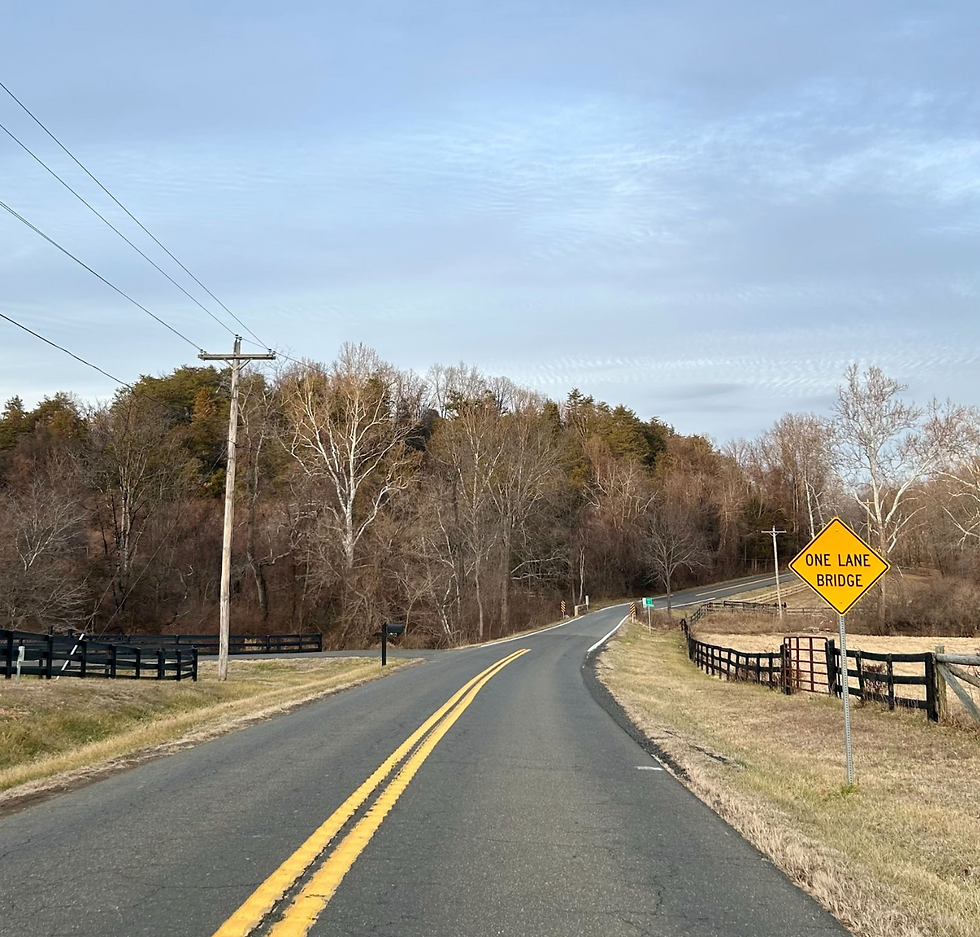
Driving into Rappahannock County this morning, I took a backroad that meandered beautifully through farm after farm along rolling hills. I was enchanted with the light gleaming off the white barren branches of sycamore trees, the shorn hayfields dotted with giant round bales, the cows of many colors, the horses of many more. It was so picturesque I almost didn’t slow down when I suddenly came upon a sign for a “one lane bridge.”
I have encountered these before, but there are always stoplights or flashing signals giving drivers on either side ample notice of the negotiation to come. In contrast, this particular one-lane bridge only had one yellow caution sign less than 100 feet from the actual bridge to warn me. There were no cars coming my way, so I was able to cross easily, and when I returned home the same way several hours later, I also met with no oncoming traffic. But all day I have been thinking about the assumptions at play that make this one-lane bridge work.
This bridge exists in a county that went strongly for a presidential candidate I despise. I traveled this same road in the dark the day after the election in 2024 and will never forget my high beams catching signs with swastika’s painted on them. There are Confederate flags that fly from some of the porches. Even though it is naturally beautiful, this isn’t a road where I feel particularly welcome driving my little blue 2011 Prius that still bears the impossible-to-remove bumper stickers for my losing candidate.
And yet, smack in the middle of this winding road, two lanes quite suddenly become one. And at this place, there is an unwritten expectation that we WILL get along. There are no instructions for what you do when you get to the bridge at the same time as someone coming from the opposite direction. But I thought about what I would do and figured we’d both slow down and wave the other on. The bridge and its minimal signage assume that everyone passing through will figure it out. It assumes we will not crash into one another. It assumes we will take turns, that we will respect each other’s need to get where we’re going and not obstruct each other’s progress. It assumes that everyone passing through has a right to be there and to get where they’re going. It assumes that we can navigate this tricky patch of road regardless of gender, ethnicity, immigration status, or (assuming we are at least 16) age. It assumes that we’re traveling close enough to the speed limit that we can slow down to navigate the bridge within 100 feet of it. There are no turn-offs on either side of the bridge. There is no assumed margin of error. The bridge assumes we’ll get it right, right away.
And I find all of these assumptions remarkable because outside of this narrow little bridge, my thinking about the people who live along this road has not been so generous. I have made assumptions about who they are and how they exist in the world based on the things they use to decorate their homes and the statistics from political maps. My assumptions are so critical. The bridge's are so optimistic.
People who live in this area probably think nothing of the bridge. The community is small enough that the bridge might get mentioned in the local driver’s ed class so kids know what to do when they get to it. But it’s just as likely they’ve seen their folks navigate the bridge their whole lives, so they just inherently know what to do. The bridge is something locals understand, but it also assumes outsiders like me will figure it out. And that makes me wonder why we don’t think about more facets of our shared humanity in this way.
What if the choices we make in our personal lives, choices based on values not everyone shares, could be viewed like this two-lane road with its one-lane bridge. We might come at those choices from very different sides - but when we meet, we can look at each other, see one another, and just negotiate who gets to go first and who goes next without judgement so we can cross and get where we’re going. We don’t need to prevent anyone from crossing. We just need to give each other the respect and care to not hinder their progress. This bridge assumes, in fact, demands, that this really isn’t so hard to do. What if the bridge is right?


Comments